We’re excited to announce that Jay Yuergens, also known as “Mr. Phase Converter,” of North America Phase Converter Co. was recently featured in HelloNation Video Magazine, where he discussed a topic many businesses and shop owners face: choosing the right phase converter for their equipment.
Across North America, many operations rely on equipment designed for three-phase power, even though their buildings only have access to single-phase service. Phase converters bridge that gap, but selecting the right type is critical to ensuring efficiency, performance, and long-term reliability.
In the article, he breaks down the three main types of phase converters: rotary, static, and digital. Each operates differently and is designed for specific applications.
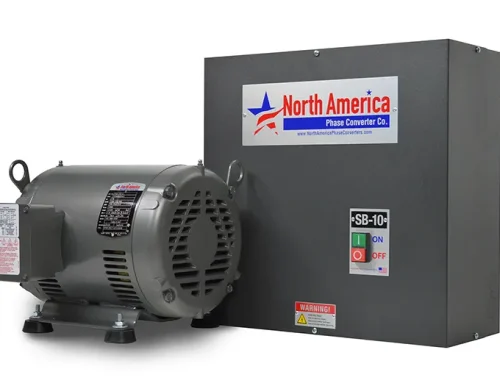
Rotary phase converters are often used in shops or facilities running multiple machines throughout the day. By using an idler motor to generate the third phase, they provide balanced, stable power that supports a wide range of equipment, from general motor loads to CNC machines. Their ability to handle varying workloads makes them a flexible solution for growing operations.
Static phase converters, on the other hand, are a simpler option designed for lighter, occasional use. They help start a motor with three-phase power and then allow it to run on single-phase power, which results in reduced horsepower. While they can be a cost-effective solution for small tools or intermittent use, they are not ideal for equipment requiring full performance or consistent output.
Digital phase converters take a different approach by using solid-state electronics to generate the third phase. This allows for precise voltage control and clean, consistent power. These systems are often preferred for voltage-sensitive machines and high-precision equipment.
He also discusses additional factors that should influence the decision, including energy efficiency, maintenance requirements, noise levels, available electrical infrastructure, and future growth plans. Each of these considerations plays a role in determining which solution is the best fit.
One of the key takeaways from the feature is that selecting a phase converter is not just about choosing a type, but also about understanding how your equipment is used daily. Matching the converter to real workloads ensures reliable operation and helps avoid unnecessary costs or limitations.
For businesses and machinists, taking the time to evaluate these needs upfront can lead to better performance, improved efficiency, and a more scalable setup over time.
For an in-depth explanation, read the HelloNation Video Magazine feature: https://hellonation.com/mag/WI/New_Berlin/20999?page_id=472328