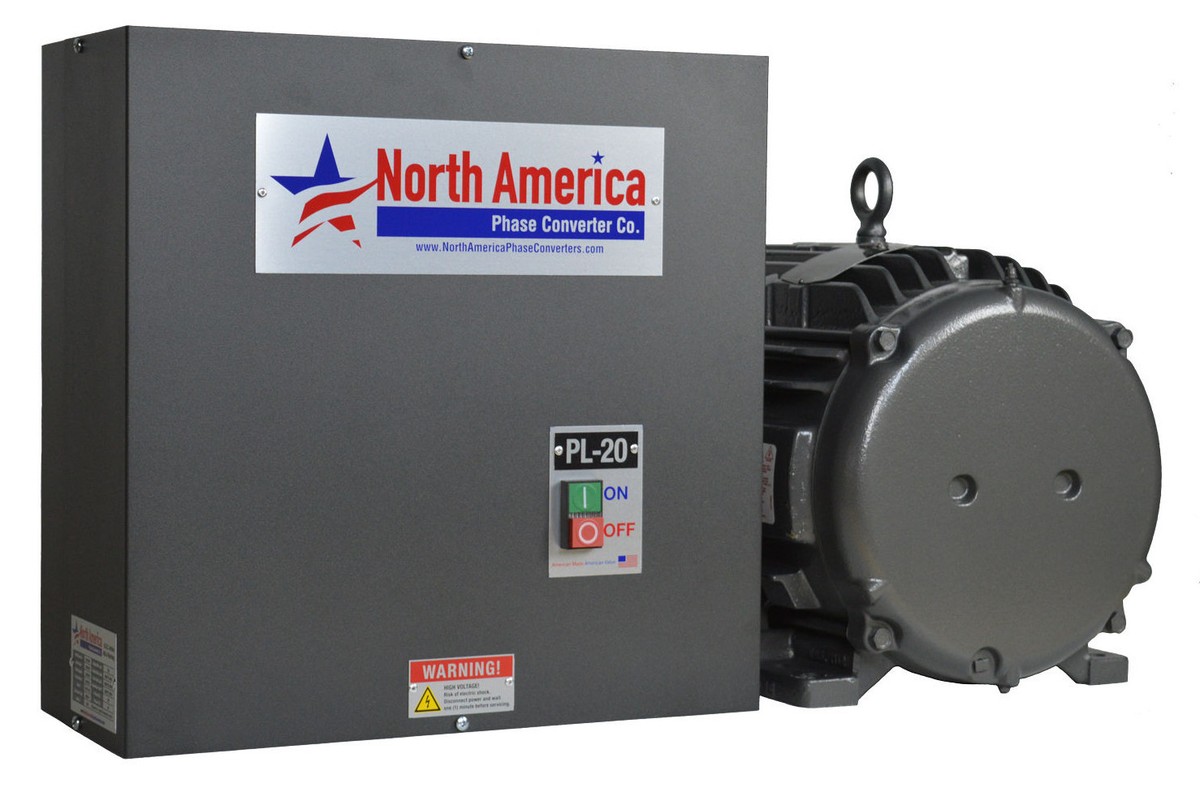
If you’re trying to determine the correct size phase converter for your needs, you’re not alone. It’s one of the most frequently asked questions when setting up new equipment in a shop, garage, or industrial space. Choosing the right size isn’t just about turning machines on; it’s about keeping them running efficiently and operating at peak performance.
Let’s break it down so you can pick the right converter for your setup without guessing or overspending.
Start with the Equipment You’re Powering
Every motor-driven machine has a horsepower (HP) rating. That’s where you start. Phase converters are sized based on the HP of the largest motor they’ll power. Check your equipment’s nameplate or manual for this number. For example, if you’re powering a 10 HP lathe, that means you need a phase converter that can start and run at least 10 HP. However, there can be more to it than that.
On a side note, if you have an inductive or resistive load, you will need to determine the amperage or kilowatt rating.
Account for Startup Load
Motors pull more power when they start up than when they’re running. This is referred to as “inrush current” or “starting load.” Some machines, such as air compressors, pumps, or refrigeration units, have high starting loads. They need a converter that can deliver a burst of power when starting, then settle into a steady supply.
In these cases, you may need to size your phase converter at 2 to 2.5 times the HP of the motor to account for the inrush current. For example, if your compressor is 10 HP, you might need a 20 HP Smart-Boost converter or a 25 HP Pro-Line converter to start it properly.
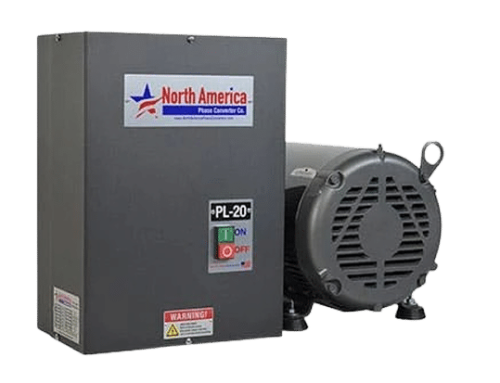
You can find phase converters built to handle these types of loads at North America Phase Converters. They’re designed for balanced power and can support both light-duty and high-torque starting motors.
Running Multiple Machines? Total Matters
If you’re powering more than one machine, add up the HP of all the motors that might run at the same time.
For example:
- A 5 HP bandsaw
- A 10 HP air compressor
- A 3 HP dust collector
If these three may run simultaneously, you’re looking at a total of 18 HP. Again, size up if one has a high startup load. You may also consider what motors could start simultaneously or in what order they will start.
Check for CNC or Sensitive Electronics
CNC machines and equipment with circuit boards or sensitive electronics need clean, balanced power. That means for these applications, sizing correctly is crucial. Undersized converters can cause voltage swings that damage electronics or trip faults.
In most cases, you will want to go with a rotary phase converter that’s at least 50% larger than the total running load. Sometimes, a better solution for CNC equipment is a digital or voltage-balanced rotary converter. You’ll find options built for this purpose on the phase converters page of our site.
Voltage and Amperage Matter Too
Sizing isn’t just about HP. Check your equipment’s voltage (208V, 230V, 240V, 460V, etc.) and the amperage it pulls. The converter you choose must match or exceed those amperage numbers.
Don’t just focus on peak numbers. Look for consistent operating voltages and check if the converter you’re considering holds voltage well under load.
Indoor or Outdoor Setup
Where you place the converter also matters. If it’s in a hot, dusty shop or an outdoor location, temperature and airflow can affect performance. Ensure you size up slightly to account for environmental strain, and always install according to the manufacturer’s recommendations.
When in Doubt or Between Sizes, Size Up
A converter that’s too small will struggle to start your equipment, run hot, and may decrease the efficiency of your machines. One that’s slightly oversized will perform better, last longer, and keep your gear safe.
At North America Phase Converters, we help customers every day choose the right unit for their setup. Our team of experienced technicians is happy to answer your questions and guide you through the selection process.
Still Not Sure? Get Help Before You Buy
If you’re unsure about which size to choose, consult with someone who is familiar with these systems. We can help you find the right fit based on your shop layout, load type, and power demands. We also have sizing tools, including a sizing calculator, tables, and videos.
Don’t risk choosing the wrong size, as it can cost you more in the long run. A properly sized phase converter provides the power you need today and can give you decades of trouble-free performance.
Need help picking the right converter? Contact us at NAPCco anytime. We’ll make sure you get the right size the first time.