
If you’ve ever wondered how a phase converter actually creates three-phase power from a single-phase supply, the short answer is magnetic induction. It’s not magic, software, or complicated electronics. It’s a physical process that has been used in electric motors for well over a hundred years.
Understanding magnetic induction helps explain why rotary phase converters are so reliable, why they handle heavy loads so well, and why they are trusted in machine shops, manufacturing facilities, and farms.
Electricity and Magnetism Working Together
Whenever electricity flows through a wire, it creates a magnetic field. If that magnetic field moves or changes near another conductor, it produces voltage in that conductor. That simple relationship is called magnetic induction.
This same principle is what makes electric motors spin and generators produce electricity. A phase converter uses that exact behavior, not to create power from nothing, but to reshape single-phase power into something three-phase machines can use.
This is the foundation behind modern phase converters.
Why the Idler Motor Matters
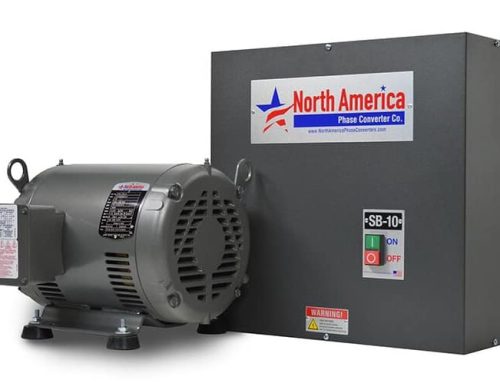
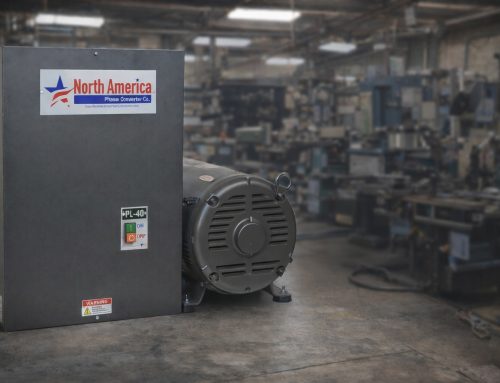
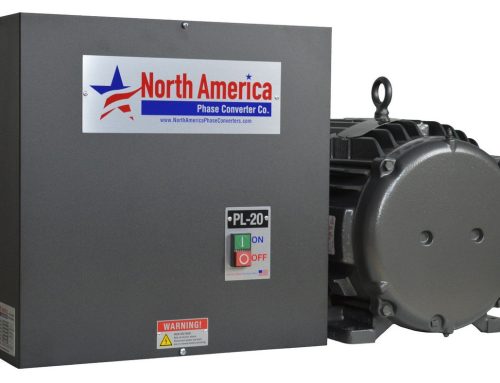
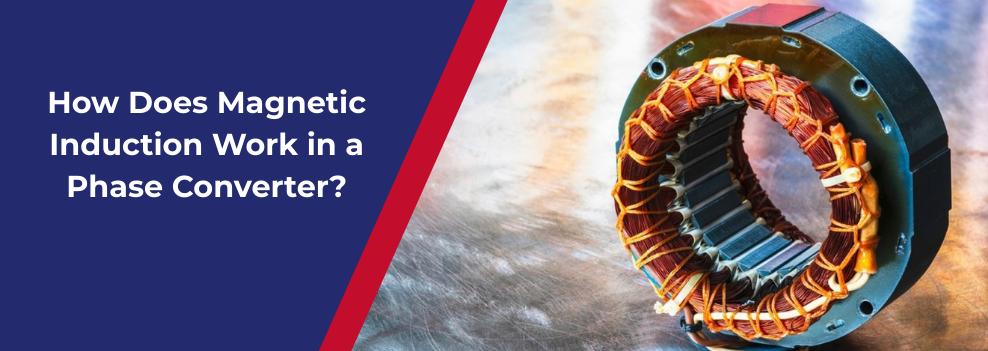
In a rotary phase converter, the idler motor, also known as a rotating transformer, is the key component. It is not connected to any machine and does not do mechanical work. Its only job is electrical and to generate the third leg.
When single-phase power is applied, start capacitors give the motor a push so it can begin spinning. Once it reaches speed, those capacitors disengage and the motor continues to spin freely.
As the idler turns, the magnetic field inside it rotates as well. That rotating magnetic field induces voltage in the motor’s unused winding. That induced voltage becomes the third power leg.
That is how a phase converter creates three-phase power from a single-phase without utility three-phase service.
How the Third Phase Is Formed
Single-phase power has two current-carrying conductors. Three-phase power needs three voltage waveforms that are offset in time. Magnetic induction inside the idler motor creates that missing waveform.
As the motor spins, the induced voltage naturally shifts relative to the incoming power. This timing difference is what allows three-phase motors to run properly. While the output is not identical to utility three-phase, it is stable, consistent, and well within the operating range of industrial equipment.
This is why properly sized phase converters can power multiple machines at once without performance issues.
Why Magnetic Induction Is So Reliable
One big advantage of magnetic induction is that it doesn’t depend on fragile electronics. It relies on physical motion and electromagnetic fields. The spinning idler motor acts like a buffer, smoothing out voltage changes and helping the system respond to sudden load demands.
When a machine starts and pulls extra current, the magnetic field inside the idler motor adjusts automatically. That is why rotary phase converters handle motor startups better than some electronic-only solutions.
This built-in adaptability is a major reason industrial users trust North America Phase Converter’s rotary phase converters for their equipment and machine shops
Voltage Balance and Load Changes
Magnetic induction alone does not perfectly balance voltage. Capacitors are used to fine-tune the system so all three power legs stay within safe voltage limits.
As machines turn on and off, the magnetic field inside the idler motor strengthens or weakens naturally. This self-adjusting behavior allows the phase converter to handle changing loads throughout the day without constant intervention.
Why Motors Respond So Well to Converted Power
Electric motors already work using magnetic induction. Because a rotary phase converter produces power using the same principle, motors respond smoothly and predictably.
This results in steady torque, reliable startups, and less electrical stress on equipment. That is especially important for machine tools, air compressors, pumps, and CNC machines.
The Simple Truth About Magnetic Induction
Magnetic induction is the reason phase converters work so well without complicated technology. By spinning an idler motor and harnessing electromagnetic behavior, a phase converter creates a third phase that industrial equipment can depend on.
It’s a proven, straightforward solution that continues to power shops and facilities wherever three-phase utility power is not available. To learn more about phase converters or to get sizing help, contact North America Phase Converter Co., and one of our knowledgeable engineers will help you figure out your best solution.